
Key Takeaways
- Most dengue prevention tips focus only on the outside. Eliminating mosquitoes matters, but your body’s immune response determines what happens after a bite lands.
- Malaysia recorded 122,423 dengue cases and 117 deaths in 2024, with deaths rising 17 percent year-on-year even as case numbers held steady. Environmental prevention alone is only part of the picture.
- The dengue virus comes in four strains. Getting infected once doesn’t protect you from the other three, which is why second infections are often more severe.
- Herbitec’s Noden contains Scutellaria Baicalensis, the herb whose extract was tested in the University of Malaya study against all four dengue strains. The study used a Herbitec-prepared extract and the findings were published in a peer-reviewed journal.
Introduction
Most Malaysians know the basics of dengue by now. Remove standing water. Watch out for the Aedes mosquito. Go to the hospital if the fever gets bad. That awareness is real, but it hasn’t translated into fewer deaths. In 2024, Malaysia recorded 122,423 dengue cases and 117 deaths, according to the Ministry of Health data. Deaths rose by 17 percent compared to the year before, even though total cases barely changed.
That gap between knowing the basics and actually being protected is what this blog addresses. Environmental steps reduce your exposure to infected mosquitoes. What this blog also covers is what happens inside your body after a bite: how your immune system responds, what supports it, and whether there are specific, research-backed options for doing so.
The sections below go through both layers, starting with the environmental steps that still matter, moving into what your immune system actually needs, and ending with the specific herbal ingredients that Herbitec has formulated around for exactly this kind of immune support.

What Are Dengue Prevention Tips?
Dengue prevention tips are steps that reduce either your exposure to infected mosquitoes or your body’s vulnerability when exposure happens. Environmental prevention targets the mosquito before the bite. Immune support targets your body’s response after the bite. Neither layer replaces the other, and most guidance that covers only one of them leaves a real gap.
Why Does Dengue Keep Infecting the Same People More Than Once?
Dengue isn’t a single virus. It’s four different strains, known as DENV-1, DENV-2, DENV-3, and DENV-4. Getting sick with one strain gives you immunity to that strain only. The other three remain a risk. That’s why some people in Malaysia have had dengue two or three times, and why a second or third infection tends to be more severe than the first.
The Aedes aegypti mosquito carries and transmits all four strains. It doesn’t behave like a typical mosquito. It bites during daylight hours, mostly in the early morning. It doesn’t take one full blood meal from one person. It feeds in short bursts across several people, which makes one infected mosquito far more effective at spreading the virus than most people realise.
Fogging kills the mosquitoes that are already flying. It doesn’t reach the eggs. And those eggs are built to survive:
“The eggs are very resistant to drying. All it needs is just a bit of water, and the eggs will hatch and breed mosquitoes.” Prof Dr Zamberi Sekawi, clinical microbiologist, Universiti Putra Malaysia.
Dengue eggs can survive without water for up to six months. A single overnight rain is enough to restart the cycle. This is why fogging-only approaches haven’t brought case numbers down in a sustained way, and why individual-level prevention, both environmental and internal, carries real weight.
There is also no approved antiviral drug for dengue and limited vaccination options available in Malaysia. When you get infected, your body fights it largely on its own. That makes the state of your immune system before and during infection of critical importance.
Read More : Liver Detox Supplements: What Actually Works?
Mosquito Bite Prevention: What Actually Works
Mosquito bite prevention starts with eliminating the places where mosquitoes breed. Malaysia’s Ministry of Health promotes the 3M method: “Musnahkan” (destroy) breeding spots, “Mencegah” (prevent) new ones, and “Memantau” (monitor) your surroundings weekly.
In practice, this means checking every object around your home that can hold even a small amount of water. Flower pot trays, roof gutters, old tyres, uncovered pails, and the drip tray under your fridge are all common spots. Empty and scrub them weekly. For containers you cannot empty, cover them tightly or use a larvicide tablet.
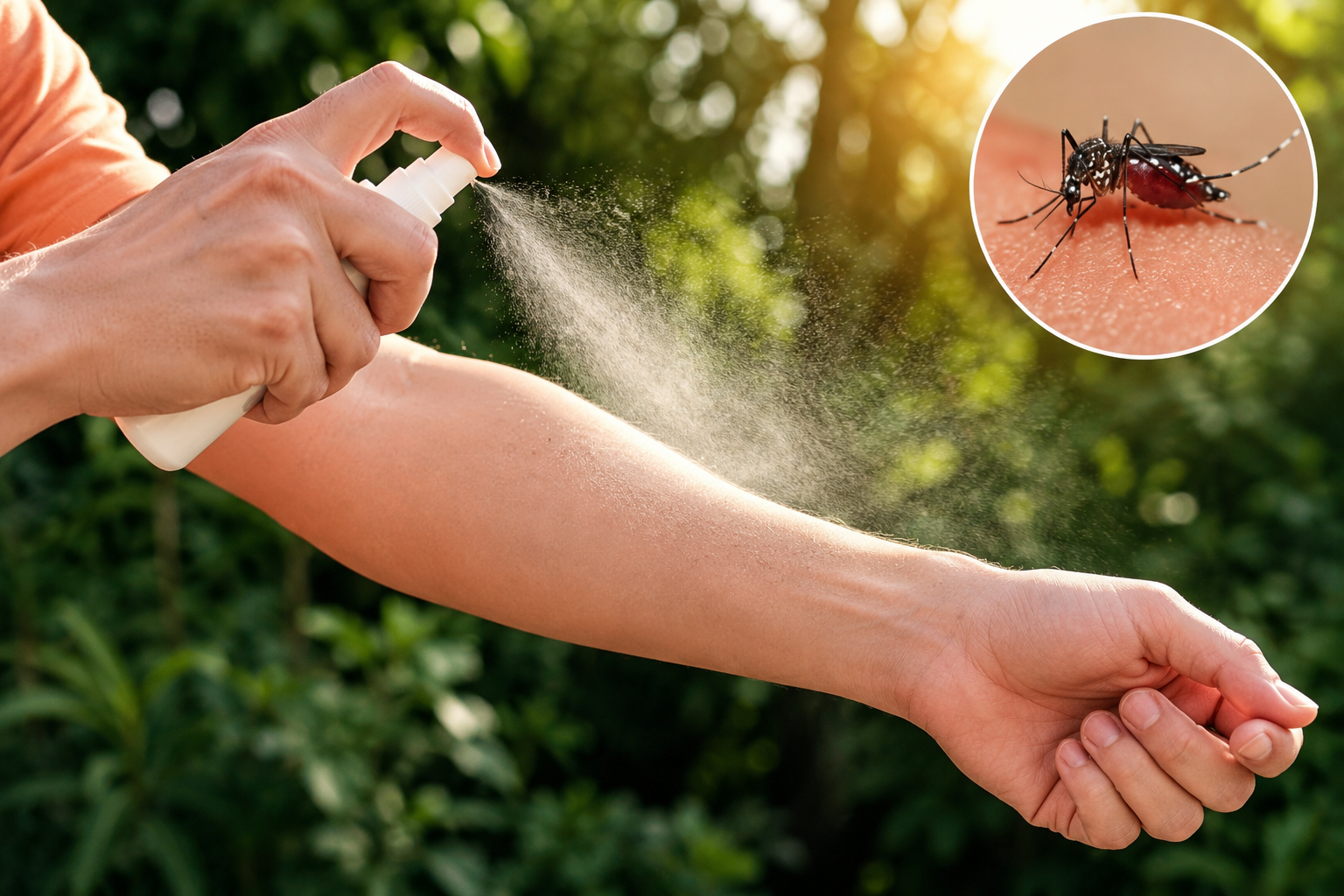
Personal protection adds a second barrier. Wear long sleeves during the morning hours when Aedes mosquitoes are most active. Apply a repellent with DEET, Picaridin, or IR3535 on exposed skin. Keep windows screened. Use mosquito nets for young children and elderly family members who tend to stay indoors.
These steps reduce your chance of being bitten. They don’t reduce it to zero. And as noted above, there is nothing after a bite that medicine can prescribe. That’s why immune support is worth taking seriously as part of the same prevention strategy, not as a separate category.
What Dengue Symptoms Should You Watch for and When Should You Go to the Hospital?
The part of dengue that catches people off guard is the timing. The illness typically has two distinct phases, and the dangerous one is not the first.
Signs of dengue symptoms appear three to fourteen days after a bite and include a sudden high fever between 38.5 and 40 degrees Celsius, a severe headache concentrated behind the eyes, intense muscle and joint pain (sometimes called “breakbone fever”), a rash that appears two to five days in, and nausea or vomiting early on.
The dangerous phase comes around days four to six, often right when the fever appears to be dropping. Many patients feel better at this point and delay seeking care. That is when severe dengue sets in, including plasma leakage, where fluid leaves the blood vessels and shifts into surrounding tissue. If untreated, this leads to shock.
Go to a hospital immediately, not a GP, if you notice any of these:
- Severe stomach pain or persistent vomiting.
- Bleeding from the gums, nose, or in urine or stool.
- Rapid breathing or extreme tiredness after the fever drops.
- Confusion or restlessness.
These signs require IV fluids and hospital monitoring. Waiting even a few hours at this stage significantly worsens the outcome.
One more thing worth knowing: dengue causes your platelet count to fall. Platelets help your blood clot. Getting a blood test early gives your doctor a baseline to track, so if platelets start dropping quickly, intervention happens faster.

What Immunity Boosters Are Actually Backed by Dengue Research?
Even in hospitals, the general treatment protocol includes sufficient sleep and hydration for quicker recovery. And it helps to understand the specific mechanism behind each. The question worth asking is: which herbal or lifestyle options have a defined mechanism and research relevant to dengue specifically?
Does Sleep Genuinely Affect How Your Body Handles Dengue?
Yes, and the mechanism is direct. Your immune system produces signalling proteins called cytokines while you sleep. These proteins coordinate your body’s response to infection. When you consistently sleep fewer than seven hours, cytokine production drops. That means your body’s first-response capacity is already reduced before any virus enters the picture.
This matters for dengue specifically because the immune response during the first 24 to 48 hours of infection shapes how severe the illness becomes. Starting that window with a depleted immune system is a disadvantage you don’t need to carry.
Continue Read : Fatty Liver: The Silent Spillover and Why It’s Not Just About Fat
What Role Does Hydration Play Before You Get Sick?
A larger one than most people assume. Dengue causes fluid to shift out of blood vessels into surrounding tissue during the critical phase. Your blood’s starting volume affects how much fluid loss your body can handle before that shift becomes dangerous. Good baseline hydration before infection gives your body a buffer it can draw from.
During illness, doctors recommend at least six to eight glasses of fluids daily, more when the fever is high. Electrolyte drinks are more effective than plain water for restoring blood volume because they replace the salts your body loses along with the fluid.
What Does Herbitec’s Noden Formulation Contain and Why Does It Matter for Dengue?
This is where the product specifics become relevant. Noden is Herbitec’s herbal formulation built around Scutellaria Baicalensis, a root herb used for centuries in Traditional Chinese Medicine under the name Huang Qin, primarily for fever, inflammation, and respiratory illness.
What connects Noden to the dengue research is that Herbitec’s own Scutellaria Baicalensis extract was the material tested in the study. In 2013, researchers at the Tropical Infectious Disease Research and Education Centre, University of Malaya, published a study in BMC Complementary and Alternative Medicine testing an aqueous extract of Scutellaria Baicalensis against all four dengue virus strains, using an extract prepared by Herbitec.
The study found the extract reduced dengue virus activity across DENV-1, DENV-2, DENV-3, and DENV-4 in a laboratory setting. The researchers concluded it was worth investigating further as a potential anti-dengue support.
Since Noden contains Scutellaria Baicalensis and the study was conducted using a Herbitec-prepared extract of that same herb, the research is directly relevant to the product.
Noden is registered with Malaysia’s Ministry of Health as a traditional remedy for fever and cold. It is not a dengue cure, and it doesn’t replace medical care. What it offers is a natural supplementary herbal option whose core ingredient has been the subject of published, peer-reviewed research connected to the dengue virus.
Do Dengue Prevention Tips Work If You Only Follow Some of Them?
Partially, but not reliably. Each layer of prevention addresses a different point in the chain of events that leads to a serious dengue outcome. Removing breeding grounds reduces the number of mosquitoes around. Repellent reduces how often a mosquito that is around actually bites you. Immune support affects what your body can do after a bite happens. Knowing the warning signs determines whether you get to a hospital in time.
Skipping any one of those layers leaves a gap. Someone who keeps their home breeding-spot free but has poor sleep and low immune function is still at meaningful risk if they get bitten outside. Someone who takes herbal immune support but lives next to a stagnant drain is still getting bitten regularly.
The practical takeaway is that prevention is cumulative. These steps aren’t alternatives to each other.
Frequently Asked Questions
1. What is the most overlooked dengue prevention tip for Malaysian households?
Most households remember to clear the garden but miss indoor breeding spots. The drip tray under refrigerators, water collected in air-conditioning drainage pipes, and vases with fresh flowers are common indoor sites. These are sheltered from rain and fogging, which makes them overlooked and persistent. Clearing them weekly alongside outdoor checks closes a gap that most public advice doesn’t mention specifically.
2. What dengue symptoms should push me to go to the hospital rather than rest at home?
Severe stomach pain, persistent vomiting, bleeding from the gums or nose, blood in urine or stool, rapid breathing after the fever drops, or sudden extreme fatigue all require hospital care immediately. These are signs of severe dengue, not ordinary dengue, and they need IV fluids and monitoring that cannot be managed at home.
3. Can an immunity booster actually reduce how severe dengue gets?
What a well-researched immunity booster can do is ensure your immune system’s baseline function is as strong as possible before exposure, which is one of the few factors within your control, given that there is no antiviral treatment for dengue. The critical first 48 hours of infection are shaped significantly by immune readiness before the virus arrives. Apart from sleep and hydration, you may consider consuming supplements that will boost your immune system.
4. What is the connection between Noden and the University of Malaya’s dengue research?
The University of Malaya study tested an aqueous extract of Scutellaria Baicalensis prepared by Herbitec against all four dengue virus strains. Noden contains Scutellaria Baicalensis as its core ingredient. The research found the extract reduced dengue virus activity in a laboratory setting. This connection between Herbitec’s prepared extract and the published study is what gives Noden its research basis relative to dengue.
5. How many dengue cases does Malaysia have each year and is it getting worse?
Malaysia recorded 122,423 dengue cases and 117 deaths in 2024. Deaths rose 17 percent year-on-year even as the number of cases held roughly steady. Part of the trend relates to Aedes mosquitoes becoming more resistant to fogging chemicals. Year-round prevention habits, both environmental and immune-focused, are now more relevant than ever.
6. Can’t I just take a vaccine?
While vaccination is available, it is important to note that vaccination doesn’t fully protect you against infection. You can still get infected – with hopefully reduced symptoms. It gives an additional layer of defence, so maintaining a strong body immune system is still recommended.
Dengue prevention in Malaysia isn’t a seasonal exercise anymore. The virus circulates year-round across four different strains, and conventional fogging is losing ground to increasingly resilient mosquitoes. The gap that remains is one you can close with consistent daily habits: removing breeding spots weekly, using repellent during the day, knowing your warning signs, and supporting your immune system with formulations that have genuine published research behind them. If you want to understand how Noden fits into that picture, Herbitec’s research pages explain the science and formulation rationale in more detail.
 View More